Why Game Show Viewers Leave When Prizes Are Revealed Past 14 Seconds
Why prize reveals past 14 seconds trigger a neurological kill-switch that ends viewer engagement
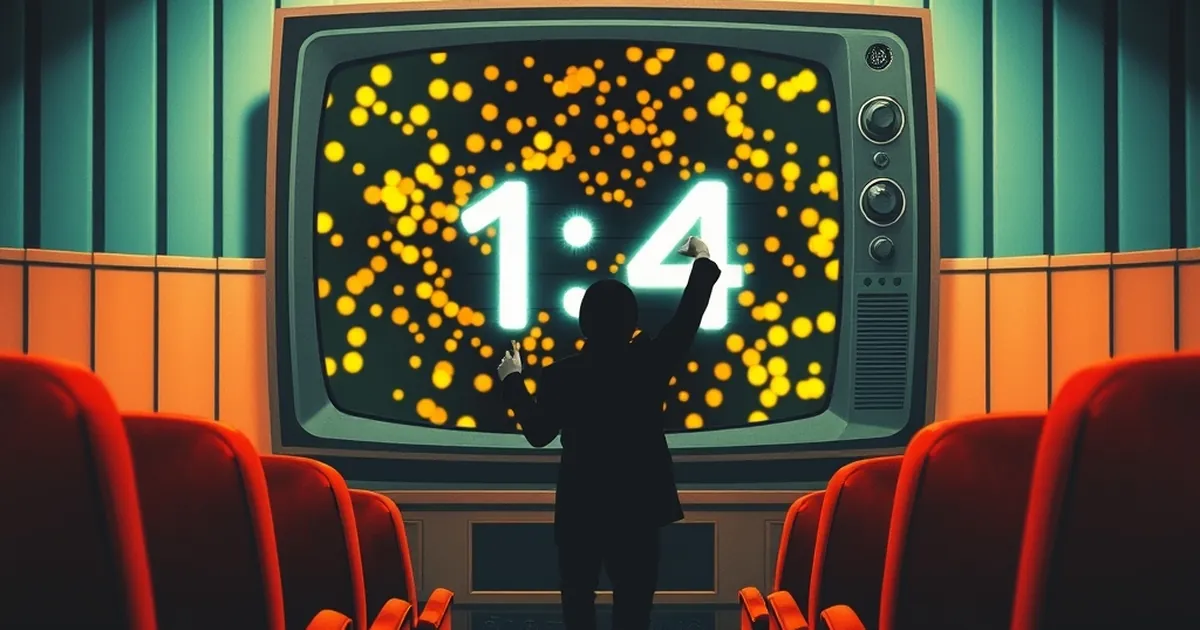
It is a peculiar ritual of modern television: the host builds suspense, the envelope is opened, the drum rolls, and then… the audience changes the channel. The moment a prize amount is revealed, the tension that held an audience captive evaporates. This isn’t just a viewer preference; it’s a neurological event, a precise window of anticipation that closes faster than a producer’s countdown. The question is not why people like prizes, but why the revelation itself acts as a psychological kill-switch for engagement.
The 14-Second Attention Cliff
Behavioral economists and media analysts have long studied the "anticipatory window," the period before a reward is confirmed. Research into dopamine response, most notably the work of Wolfram Schultz, shows that the brain’s reward system fires most intensely during the anticipation of a reward, not the receipt of it. When a game show host pauses for a dramatic beat, the viewer’s neural activity spikes. But when the number is finally spoken, the brain registers a "prediction error"—the uncertainty is resolved, and the dopamine surge flatlines. In practical terms, this means a reveal that drags past roughly 14 seconds shifts the viewer from a state of active prediction to passive observation. At that point, the show becomes a transaction, not a game.
The Variable-Ratio Reinforcement Trap
The most gripping shows understand this by accident, relying on a principle B.F. Skinner identified as variable-ratio reinforcement. In his famous experiments, pigeons pecked at levers most persistently when the reward schedule was unpredictable. Game shows that tease multiple possible outcomes—briefcase values, card flips, or mystery boxes—create a similar schedule of near-misses. The problem arises when the reveal sequence becomes too linear. If a contestant opens a box and the host immediately says "That’s $10,000," the variable is gone. The viewer’s brain, starved of the next unknown, begins scanning for the exit. The best formats hide the prize value but keep the path to the prize unknown.
Loss Aversion and the "Pity Pause"
There is a darker reason viewers flee: the reveal forces a rapid, uncomfortable calculation. Daniel Kahneman and Amos Tversky’s work on loss aversion shows that losing $100 feels twice as painful as gaining $100 feels pleasurable. When a contestant wins a modest amount after a high-stakes build-up, the audience doesn’t process it as a win—they process it as a relative loss. The 14-second threshold is often where producers insert a "pity pause," a beat of dead air to let the contestant emote. This is a fatal error. Those extra seconds give the viewer time to compute the missed jackpot, triggering an empathetic cringe that kills the fun. The reveal must be immediate, clean, and followed immediately by a new risk, not a hug.
Designing for the Next Unknown
The forward-looking fix for producers is not to shorten the reveal to zero, but to make the reveal a midpoint, not an endpoint. The most successful formats—think of rapid-fire bonus rounds or escalating risk ladders—treat the prize as a temporary marker. The moment a value is shown, a new clock starts with a new, higher-stakes question. This exploits the "goal gradient hypothesis," where people work harder as they perceive themselves closer to a finish line. The practical takeaway for anyone designing engagement—from live events to interactive media—is to treat every resolution as a springboard. If the audience knows the prize and the next risk within the same breath, the 14-second cliff becomes a launchpad. The goal is never to satisfy curiosity; it is to redirect it.