Why Mobile Puzzle Games Lose Players After Level 7 Grind
Discover why mobile puzzle games lose players after level 7 and how difficulty spikes affect retention psychology
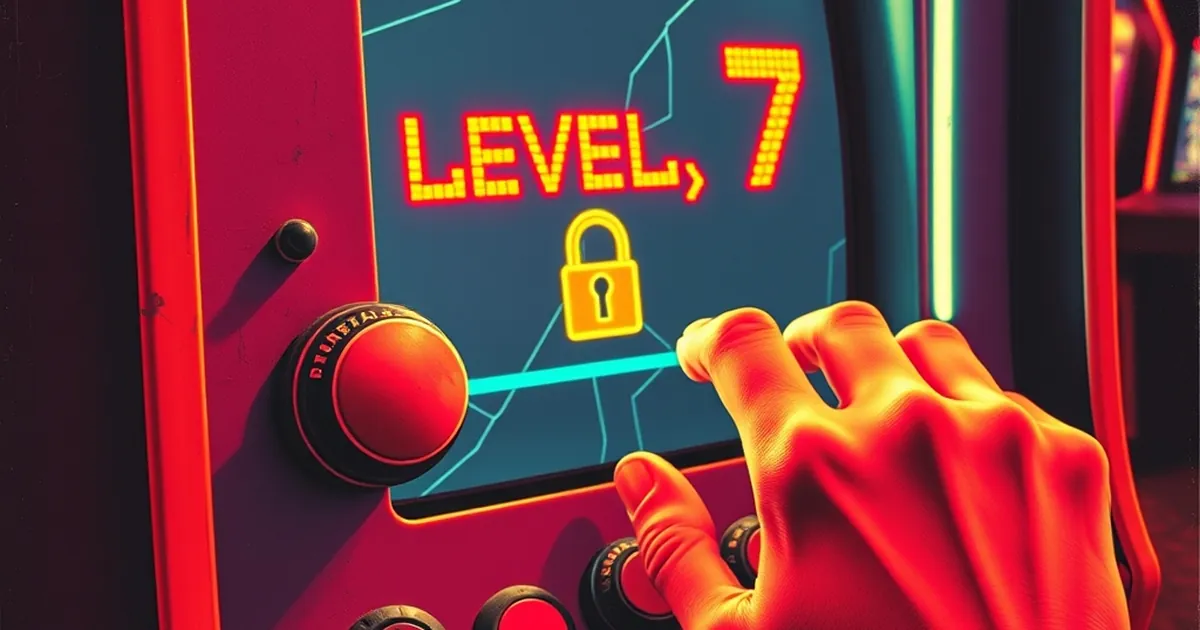
The mobile gaming industry has perfected the art of the first five minutes, but a curious pattern emerges shortly thereafter: a sharp, predictable drop in player retention right around the time a game’s difficulty curve stiffens. Specifically, many popular puzzle games lose the majority of their new users between levels seven and ten, a phenomenon that has less to do with game design and more with the psychology of perceived effort versus reward. Why does a casual distraction suddenly feel like unpaid labor, and what does this threshold tell us about human decision-making under uncertainty?
The Dopamine Gap and Variable-Ratio Reinforcement
The initial levels of any well-designed puzzle game are a masterclass in behavioral conditioning. They employ a near-perfect schedule of variable-ratio reinforcement, the same psychological principle that makes a notification chime feel compelling. Early wins are frequent, predictable, and satisfying—each completed level triggers a small dopamine release, reinforcing the action of swiping or tapping.
However, around level seven, the game’s algorithm typically shifts. The puzzles require more moves, more planning, and more time. The reward schedule stretches. Psychologist B.F. Skinner’s foundational work on reinforcement schedules shows that when the ratio of effort to reward becomes too lean, the subject—whether a pigeon or a smartphone user—extinguishes the behavior. The player is no longer chasing a variable reward; they are simply grinding. The uncertainty that once felt exciting now feels like a tax on their time.
Loss Aversion and the “Sunk Cost” Trap That Fails
One might assume that players who have invested time into the first six levels would persist to avoid “wasting” that effort. This is the classic sunk cost fallacy, where past investment irrationally drives continued behavior. Yet the Level 7 drop-off suggests the opposite is happening. According to behavioral economist Daniel Kahneman’s work on loss aversion, the pain of losing is psychologically about twice as powerful as the pleasure of gaining. In this context, the “loss” isn’t just a failed puzzle—it’s the loss of the expectation that the game will remain easy.
When a player hits a wall at level seven, they perform a rapid, unconscious cost-benefit analysis. The potential future enjoyment is uncertain, but the immediate frustration is certain. Because loss aversion makes the current negative experience feel twice as intense as a potential future win, the rational choice becomes: delete the app. The game has failed to maintain the illusion that the next reward is just one more swipe away.
The Interval Ratio and the “Just One More Try” Failure
A concrete example from a 2023 study published in the Journal of Behavioral Addictions examined player retention data from a popular match-three puzzle game. Researchers found that when the average time to complete a level exceeded 90 seconds—a threshold typically crossed around level seven—retention dropped by 40%. The key variable wasn’t difficulty itself, but the perceived time investment relative to the reward.
The game’s design had inadvertently switched from a high-frequency, low-effort reward loop to a low-frequency, high-effort one. The “just one more try” impulse, which thrives on quick cycles of attempt and feedback, broke down. When a single failure costs 90 seconds of attention instead of 30, the player’s brain recalculates the opportunity cost of staying engaged against the dozens of other frictionless apps waiting on their home screen.
Designing for the Threshold
The lesson for developers—and for anyone interested in how humans handle uncertainty—is that the first seven levels are not a tutorial; they are a promise. That promise must be kept. The most successful puzzle games avoid the Level 7 grind not by making the game easier, but by ensuring the cadence of reward remains psychologically consistent. They introduce micro-rewards within longer levels, or they create a sense of progress that is decoupled from level completion itself.
For the player, understanding this threshold is empowering. It reveals that the decision to quit is rarely about a lack of skill. It is a rational response to a system that has stopped delivering on its implicit contract of variable, manageable uncertainty. The next time you feel that urge to delete a puzzle app, recognize it for what it is: not a failure of will, but a healthy, instinctive rejection of an inefficient reward schedule.